Showing posts with label TV. Show all posts

Sunday, July 01, 2012

Taiwan Ends Analog TV Broadcasts

Taiwan terrestrial TV broadcasters ended analog broadcasting officially on June 30, 2012 with promises for a future based on HDTV programming reports Radio Taiwan International.

"Taiwan officially completed its transition to digital TV broadcasting on June 30, 2012, switching off its analog signals for the last time.

It was the final step in a four-phase process that began on May 7. Northern Taiwan was the last area to make the transition from analog to fully digital wireless TV broadcasting.

At a ceremony in Taipei, Taiwan's Premier Sean Chen said the era of digital and high-definition TV had come. He also said the next step would be to develop content for digital TV.

Chairwoman of the National Communications Committee, Ms Su Herng, was also present at the ceremony. She said turning to digital TV is a global trend, adding that European countries including Switzerland and Germany have already completed the transition. She also said the analog spectrum can now be used to improve Taiwan's broadband Internet services."

There are high hopes for greater creativity from the three commercial broadcasters, TTV, CTV and CTS. 


Source: Radio Taiwan International
Radio Taiwan International logo
RTI is the international broadcaster for the Republic of Taiwan, formerly known as CBS - the Central Broadcasting Station, Taipei

Thursday, April 08, 2010

PRC Research on Cable Platform Shows IP Driven Growth in Domestic Demand

Digital Broadcasters Vendor News Asia (DBVNA) has learnt that latest IP research in the People's Republic of China (PRC) shows that demand for new TV services on its cable platform is driving increased replacement of standard definition (SD) "1-way set-top boxes" with high definition (HD) "cable+IP 2-way set-top boxes".
Authors of an upcoming report, IMS Research predicts that more than half of cable set-top boxes (STB's) produced for the Chinese PRC domestic market by the end of 2011 will be in HD as a result of government initiatives and increased competition with other platforms.
Recent directives by the Beijing Central Government for cable TV operators to converge voice and video networks has resulted in a boom for cable operators with the IP upgrades.
The IMS Research news release to Digital Broadcasters Vendor News Asia (DBVNA) stated that in some urban areas, 2-way cable networks utilize last mile IP and use cable set-top boxes with an IP back channel. In general, in major urban areas such as Shanghai and Beijing, cable operators compete with IPTV services where the current business model lacks HD content and high bandwidth, and it is hoped that greater availability of HD content and a “catch-up TV” mentality will encourage further digitization and customer retention. “Conversion of China’s cable infrastructure to 2-way, IP-based, HD-capable networks will occur gradually over many years,” emphasizes analyst IMS Research, Anna Maxbauer, co-author of an upcoming report: The World Market for Digital Set-top Boxes & iDTVs – 2010 Edition. Ms Maxbauer noted that the costs of infrastructure and equipment upgrades will likely fall to operators and the government. Why? Because: "most consumers are interested in new features but are unwilling to pay extra for them,” she says. DBVNA does not have a business connection nor paid by IMS Research, which is a UK-based research house and a consultancy for a wide range of global electronics markets with offices in Austin, Texas and Shanghai, China. The PRC research above was issued from IMS Research in Austin, Texas.

Sunday, December 13, 2009

Vietnam :: REV Boosts IT Growth At Voice of Vietnam

Digital Broadcasters Vendor News can report that as a result of deliberations at the fifth congress of the Radio and Electronics Association of Vietnam (REV) a Five Year program of advancement in IT and telecommunications has been formulated. The program is to widen the scope and effectiveness into new technology research to include more universities across Vietnam and at the grass roots level. This move is presumably to tap into bright young talent across the whole spectrum of new technologies to the benefit of the IT and broadcast infrastructure. Two specific moves bode well for the future in tightly structured Vietnam. These are: to improve the quality of training and increase international co-operation. The current chairman of the Radio and Electronics Association of Vietnam (REV) is Nguyen Van Ngo. At the congress, the deputy general director of Radio the Voice of Vietnam (VOV), Ms Hoang Minh Nguyet, acknowledged the active contribution by professors and doctors who help VOV research and apply advanced technologies. The REV/VOV developments should be positive news if you have related business with Vietnam and Voice of Vietnam Radio and TV and state telecoms. The REV Congress opened at the National Radio Centre in Hanoi on December 12. REV's website: http://www.rev.vn Vietnam Story Source

Monday, September 01, 2008

Digital TV | Promo Media Helps Al Aan Dubai in Pan Arab Expansion

Zoya Sakr, Head of Sales and Marketing at Al Aan TV, Dubai (left)has informed Digital Broadcasters Vendor News Asia (DBVNA) that Promo Media of Beirut has been appointed Al Aan's on-air advertising and marketing representative for Lebanon, Syria and Jordan. Sakr see this as a pan-Arab springboard in the fast growing satellite TV arena. Awareness levels of the Al Aan TV channel have increased remarkably in the region since its establishment in 2006. Imad Jomaa, Chairman of Promo Media said “viewers showed a markedly high preference for Al Aan TV content, with programs offering original programming presented in an innovative infotainment format. We are confident of representing the channel as this will lead certainly to mutual success”. Al Aan's content is based on constant research to identify and respond to the changing desires of the regional audience. The unique infotainment format is a first for the region. It means the viewer can benefit from the daily contact with the channel resulting in a pleasurable viewing experience. A recent study by Market Research firm, Ipsos showed that viewership of the channel has increased 80% from last year. DBVNA notes that Al Aan TV is a pan-Arab satellite TV broadcaster based in Dubai Media City. Distribution is by Arabsat or Nilesat. Al Aan targets the needs and aspirations of a young, dynamic and modern family audience with emphasis on the female viewer segment which shows strong support to the channel's programming approach. Al Aan TV website is in Arabic with a boiler plate page in English.

Tuesday, May 20, 2008

Digital Broadcast Asia | SingTel Now Into Mobile TV

In a formal announcement to Digital Broadcasters Vendor News Asia, Singapore Telecommunications Limited (SingTel) said it had launched its Mobile TV service in Singapore today using Nokia Siemens Networks’ Mobile TV streaming solution to become one of the first in Asia-Pacific. This service complements SingTel's mio TV service and adds another dimension to accessing quality pay TV content anytime, anywhere. The new service includes live TV channels with electronic program guide (EPG) information and video-on-demand (VoD) . SingTel is using Version 3.5 of Nokia Siemens Media Delivery Solution (MDS) as its Mobile TV platform while the phone application is based on Adobe’s Flash Lite technology. The MDS can incorporate video streaming (unicast), and future technologies. Respective company executives for this project are: Wong Soon Nam, VP Consumer Marketing, SingTel and Thomas Yeo, Head of SingTel Singapore Customer Team, Nokia Siemens Networks. “This deal demonstrates our ability to partner with forward thinking operators like SingTel to make the most of industry-leading solutions such as Nokia Siemens Networks’ MDS.” Digital Broadcasters Vendor News Asia regards SingTel as Asia’s largest multi-market mobile operator, serving more than 185 million customers in eight markets including Australia.

Sunday, May 18, 2008

Broadcasters| US Radio-TV Tops 175m Weekly Audience Worldwide

United States Broadcasting Board of Governors (BBG) Chairman, James Glassman said in Washington on May 15 that the government funded international broadcasting outlets reached a 175 million audience on a weekly basis. The figure is up from 155 million audience in 2007. Mr Glassman was addressing a meeting of the "Heritage Foundation". BBG's broadcasters include the Voice of America (VOA), Radio Free Europe/Radio Liberty (RFE/RL), the Middle East Broadcasting Networks (Alhurra TV and Radio Sawa), Radio Free Asia (RFA), and the Office of Cuba Broadcasting (Radio and TV Martí). In his speech, Glassman pointed to recent events in Burma and Tibet. VOA and RFA warned the Burmese people of the potential severity of cyclone Nargis days before official Burmese media, and both broadcasters provided breaking news coverage of pro-democracy protests in Tibet in March and the subsequent Chinese crackdown. The BBG global audience estimate is based on measured audiences from independent surveys conducted worldwide in accordance with industry-standard research methods. Audience gains in Indonesia, Nigeria, and Syria, in particular, helped drive the increase. Weekly audience is one element in a wide range of quantitative and qualitative data scrutinized by BBG to ensure continued delivery of high-quality content. "Our research probes questions such as whether our audiences trust our news and whether our broadcasts are helping to improve their understanding of their world and America," Glassman said. "On those two counts - and on less tangible measures - the BBG is performing well." The BBG website carries the full text of Glassman's speech. Meanwhile BBG, the US government funded broadcasting effort is behind that of its main western rival,the BBC. Latest figures show that the combined global radio and TV audience outside of the United Kingdom reached 233 million, as per a BBC press statement of 21.05.2007.

Friday, July 27, 2007

DBVNA :: TVNZ Charter Renewal - Good News For DTV Vendors

This Digital Broadcasters Vendor News Asia (DBVNA) message is directed at those involved in New Zealand's broadcast TV technology sector both at the individual company level as well as at the TV industry grouping level - to the opportunity for you to influence the digital direction of Television New Zealand (TVNZ). The reason is that it is now review time of the Television New Zealand charter as the country's national broadcaster. This takes place every 5 years. TVNZ faces the expansion of digital, responding to the changing needs of broadcaster - consumer/viewer interaction. Here is your opportunity to influence the choices and technology standards adopted by TVNZ as it moves into digital diversification both in digital delivery and content origination systems. The TVNZ says in its remit for Charter renewal: "of the 'high standards' it wishes to maintain in all areas. At the same time it intends to play a leading role in New Zealand television by setting standards of program quality and encouraging "creative risk-taking and experiment". I interpret that to mean that risks in content will require the need to have the technology available to support content experimentation. This is where manufacturers across all production and distribution areas can put to TVNZ's Engineering management proposals to make proprietary systems the preferred choice of TVNZ. There is no better time than at Charter renewal time when the corporation has to be legally open to new ideas and thinking in pursuit it license renewal - that is what the Charter review is all about. A TVNZ press announcement of earlier in July stated that the process for reviewing the TVNZ Charter is governed by the Television New Zealand Act 2003 which says the Charter must be reviewed every five years by Parliament. In preparation for the statutory review, TVNZ wishes to present the Minister of Broadcasting with a suggested redraft with the public's views on it. The way TVNZ wants to move forward and its proposals are presented online at http://www.tvnz.co.nz , use keyword: Charter Redraft. While the heightened publicity with advertisements on TV One and TV2 flagship channels of TVNZ are directed at a month long public debate, the actual TVNZ submission will not be made until later in the year to the Minister of Broadcasting. I suggest to you as a digital TV manufacturer or distributor, to consider making your move now to connect with TVNZ Engineering and push your case for them to adopt your new digital technology. Remember, that TVNZ will launch new digital channels later this year and early next with TVNZ 6 and TVNZ 7 and increasingly in future years through TVNZ ondemand, the TVNZ website and other media devices. If you are involved in the audio - radio side of the industry, you will be aware of the process that Radio New Zealand went through in its recent Broadcast Charter renewal. TVNZ informed DVBNA that it was following the process Radio New Zealand adopted for its Charter review. To recap, there are two areas that caught the attention of DBVNA in the TVNZ management proposals that give a guide as to new technology requirements as TVNZ moves ahead in the digital TV arena: Innovation and Development of New Zealand talent, as set out as follows: - TVNZ to promote innovation, risk taking and creativity to extend the range of ideas and experiences available to New Zealanders by creative risk-taking and experimentation. Areas of the current Charter covered by this redrafted point: - TVNZ to support and promote the talents and creative resources of New Zealanders and of the independent New Zealand film and television industry. The emphasis on the contribution on a greater contribution from the commissioning of outside production work.

Tuesday, April 17, 2007

Digital Broadcasters | Doordarshan Up Up and Away in UK

Digital Broadcasters Vendors News notes that after years of indecision, India's state TV, Doordarshan is up, up and away in UK's satellite land using DVB. From London on April 16 DD launches a general channel, DD India and 24/7, DD News. Both are free - to - air, part of the Sky UK satellite TV mux in Hindi and both are transmitted on the Eurobird satellite positioned at 28.5 degrees East. This gives a satellite footprint of 95 per cent of Europe, let alone the UK. Backers of the channels are the London based, Rayat Television Enterprises Ltd. The Rayat Group has interests in retail, air travel and technology. It has invested £2 million in the 5 year project, (with a first refusal option for a further 5 years). Much of the expenditure includes advance royalty payments (10 million Rupees) to Doordarshan and set up costs. Khalid Mahmood, Rayat Group CEO said the channels will connect British Indians with their roots and set standards in ethnic broadcasting. An anonymous executive within Doordarshan said it had taken 48 years for Doordarshan to make the decision to have a UK operation. India state TV's late arrival in the European satellite TV broadcasting scene sees it coming up against established competition from UK, Indian Pakistani and Bangla channels. These include from Zee, STAR, Sony, NDTV and local Asian channels, MATV and Raj. They all TV target the same audience with some emphasising younger values and others the more older traditions. Line up of UK channels directed at Indian, Pakistani, Nepali (Galaxy TV on Hotbird 6) and Bangladesh viewers on FTA EuroBird 28.5E with main languages used: Urdu (Pakistan) Channels: PrimeTV: 11623 Urdu Punjabi PTV Global: 11224 Urdu GeoTV: 11343 Urdu ARYOneWorld: 11343 Urdu The Musik: 11343 Urdu DM Digital: 11261 urdu Bangla Channels: Bangla TV: 11344 Bengali ATN Bangla: 11488 Bengali NTV Channel S: 11488 Bengali Channel S UK: 11488 Bengali English Language/Mixed Channel S UK: 11488 English RajTV: 11428 English/Hindi MATV: 11389 English/Mixed Hindi Channels DD India: 11426 Hindi (20 per cent English, some Gujarati and Tamil) DD News: 11527 Hindi mainly (20 per cent English, some Gujarati and Tamil) Star One: 11262 Hindi mainly DD India UK and DD News UK carry their own logos on the TV screen along with that of Rayat TV. Researching this article, Digital Broadcasters Vendor News found that Doordarshan, has over 1.4 billion viewers worldwide.

Monday, April 16, 2007

Digital Broadcasters | Bangladesh Maverick Ekushey TV Returns

Digital Broadcasters Vendor News notes that Ekushey Television (ETV) in Bangladesh is still on air terrestrially and via satellite two weeks after getting its license back after a four year hiatus. A maverick broadcaster if ever there was one.

Staying on air terrestrially seems no mean feat in a Bangladesh where ETV was forced off air in Aug, 2002 by then-prime minister, Begum Khaleda Zia for apparently favouring her rivals in the Awami League in its programming. The broadcasting authority, the Bangladesh Telecommunication Regulatory Board (BTRC) seized ETV's transmission equipment.

ETV, the country's first private TV station was awarded its original license by the Awami League government in April 2000.

Although the high court ordered the Khaleda Zia government to return transmission equipment to ETV in 2005 it never did. Yet in the meantime, a further six local, private TV networks were allowed to start broadcasting - but only via satellite distribution.

ETV's break came after Khaleda handed power to an interim government in October 2006, on completion of a five-year term in office. Just a few weeks ago the BDTC under the temporary administration government gave ETV the green light to resume transmissions.

Digital Broadcasters Vendor News is still puzzled why ETV along with the state-owned Bangladesh Television are the only terrestrial (as well as satellite TV network) operators in the country.

Sunday, April 08, 2007

Digital Broadcasters | Bahrain | 1st Private TV Station

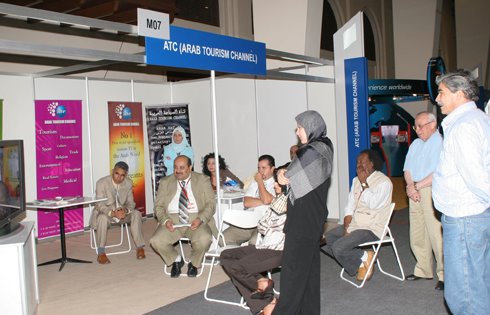
Digital Broadcasters Vendor News has learnt that Bahrein (Bahrain - مملكة البحرين Mamlakat al-Baḥrayn ) this weekend is getting its first private digital broadcaster, Atlas Travel and Culture. Satellite channel owner is local businessman Jamil A Wafa and partners. Bahreini reports say media expert Dr Mohsen Saffar will chair the TV station's board. Atlas Travel and Culture is believed will be part of the Bahreini Government TV mux on Arabsat's Badr transponder frequency 12226 horizontal. The station is also to be found on Nilesat. At press time exact details are unknown. The TV station's operations are based at Saar, about 15 kilometres west of Manama. Apparently the TV channel has the tacit support of Bahrein's Ministry of Information. Atlas Travel and Culture will be a-political and is reported to have already produced local documentaries on non-Bahreini contentious subjects. Digital Broadcasters Vendor News believes the only other direct "travel TV" competitor among Middle East Satellite television broadcasters is another outlet with the abbreviation "ATC" - Arab Travel Channel (ATC) from Dubai. That ATC has been distributed on satellite on Nilesat 102 since late 2004. Jamil A Wafa is a well connected member of the Bahrein establishment. His flagship group, UNITAG has handled many infrastructure projects in Bahrain in the past 30 years. http://www.unitag.net/ Unitag has has worked with Thomcast Thomson Broadcast in the past for broadcasting equipment installation in Bahrain. One division, Magnum Holdings is also the backer of the premier travel exhibition in the region - http://www.bitebahrain.com/, also more information at http://www.meembahrain.com The photograph above of Mr Wafa is from the unitag web site. Meanwhile, Arab Travel Channel at Dubai Studio City (DSC) expanded its operation by expanding to a 60,000 sqft facility recently, and named as the Four Lines DSC. (Aptly named after its owner, Four Lines Media, a member of the UAE-based, Suwaidani Group). Picture shows ATC of Dubai at its stand at the BITE Exhibition 2006.

Thursday, April 05, 2007

Digital Broadcasters | Genesis Opens Tokyo POP

Tokyo, Sydney and Auckland have been added as the latest "point-of- presence" POP's in Asia-Pacific on the New York - based, Genesis Networks global video transmission network. Digital Broadcasters Vendor News understands that POPs are already operational in Beijing, Singapore, and other major media centers in Asia. The new POP sites will allow Genesis Networks to interconnect with local broadcasters throughout the Asia Pacific region, notably in China and Japan routing content using fibre optic and satellite from Asia via the Genesis network and broadcasting it anywhere in the world but mainly to the US. The company has a teleport in North Miami and is building a reputation as a carrier of ethnic channel programming from India, Poland and Latin America for distribution to US cable TV systems.

http://www.gen-networks.com

Wednesday, April 04, 2007

Digital Broadcasters | Philippines Enforces Cable TV IP Violations

Philippines has tightened the noose around the neck of cable TV pirates. From today a strengthened complaints process will be enforced. The legal framework for filing violation of broadcasters program content by cable TV pirates in the Philippines has been enacted between the Intellectual Property Office of the Philippines (IP Philippines) and the National Telecommunications Commission (NTC). Together, they will expedite the resolution of cases filed with the NTC against cable operators involving violations of intellectual property rights, and NTC rules and regulations. Complainants can file to the IP office or the NTC.

The new procedures do not interfere with legal complaints being filed directly against cable TV operators by broadcasters and broadcast rights holders either.

Cases of copyright infringement reported to the NTC already in the pipeline will also be brought into the new system's framework.

CASBAA and other rights holders approve and welcome the new administrative procedures in the Philippines.

While at first glance it looks to be just another legal layer complainants have to work through, if everything goes to plan, complaints on broadcast rights violations will be funnelled through the same reporting system, quickening the process and making decisions more effective.

I hope there is a uniform and unique case numbering system, if all cases are to follow a standard procedure.

Monday, April 02, 2007

Digital Broadcasters | Malaysia to Adopt DVB-T

So now we know, it is confirmed the Malaysian Government is going ahead with the adoption of DVB-T for digital terrestrial transmissions. Digital Broadcasters Vendor News notes that this is clearly ahead of the intended date of such an announcement - a month before the present Klang Valley trial was due for completion.

Deputy Information Minister Chia Kwang Chye who made the announcement, March 26 at the ABU Digital TV Symposium in Kuala Lumpur indicated that the results of the DTV trial were very positive, the meaning was "why wait?"

According to Mr Chia more than 60 percent of trial participants said signal quality was 'good' to 'very good'; 70 percent sound quality was better -- responses being all better than his department had imagined.

That means that DTTV will roll out in the Klang Valley in 2009, and in Mr Chye's quoted words "Malaysia was keen to trial the DVB-H standard for mobile phones".

Mr Chia said the Malaysian government's Digital Task Force was also considering the implementing the HD format in programming.

Monday, March 26, 2007

Digital Broadcasters | India Terrestrial TV Reach

In India, terrestrial TV coverage by Doordarshan still only covers 79 per cent of the country reaching 91 per cent of the population. For All India Radio the figures are better at 91.78 per cent and 99.14 per cent respectively. The Andaman and Nicobar Islands are covered through Doordarshan’s free to air DTH satellite service.

Minister of Information & Broadcasting and Parliamentary Affairs, Shri P. R. Dasmunsi in written reply to a question in the Lok Sabha (Parliament) March 20 said that as part of India's Eleventh Five Year Plan, subject to funds availability more AIR FM radio stations would be set up to fill gaps in coverage while DTH for DD was the considered route. (Digital Broadcasters Vendor News interpretation.)